Course 8
Organ repertoire by César Franck I by Prof. Christophe Mantoux
Dates: July 20-24 (1st week)
Timetable of the masterclasses of this course:
Monday 20 July 13.15-15.15 Koepelkathedraal (Leidsevaart 146, entrance opposite of Jos Cuypersstraat 32)
Tuesday 21 July 13.15-15.15 Koepelkathedraal
Wednesday 22 July 10.30-12.30 Phil Grote Zaal (Lange Begijnestraat 11)
Thursday 23 July 13.15-15.15 Phil Grote Zaal
Friday 24 July 13.15-15.15 Josephkerk (Jansstraat 43)
NB This timetable is provisional and is subject to change! The definitive timetable, including the locations of the classes, will be provided on arrival in Haarlem.
Description
When composing for the organ, César Franck drew on the post-classical French tradition, using the instrument in layers. Franck was undoubtedly influenced by Aristide Cavaillé Coll’s instrument design. He created an orchestral aesthetic that reflected his evolution as a composer, bringing a Germanic depth that revolutionized French musical concepts. The course will be an opportunity to highlight the stylistic, instrumental, and architectural features of his work, in connection with the interpretative choices that bring them to the fore. Interpretative traditions will also be questioned in the light of historical knowledge.
Repertoire List
Six Pièces d’orgue:
Fantaisie, op. 16
Grande Pièce Symphonique, op. 17
Prélude, Fugue et Variation, op. 18
Pastorale, op. 19
Prière, op. 20
Final, op. 21
Trois Pièces:
Fantaisie
Cantabile
Pièce Héroïque
Trois Chorals:
Choral I
Choral II
Choral III
Pièce pour Grand Orgue (1854 – in A major)
Andantino pour orgue (1858 – in g minor)
L’Organiste (59 pieces)
Choose which pieces from this list you want to prepare and let us know by sending an email to office@organfestival.nl. Please note that the playing time per student is limited and that we cannot guarantee that you can play all your preferred pieces. Nevertheless, choose approximately 3-5 pieces so that the professor can compile an attractive course program.
If we do not receive notification of your prepared pieces, your registration will be changed to passive.
This course can not be combined with:
[5a] Organ repertoire from the French Classical period (Heurtematte)
[5c] Organ repertoire by Jan Pieterszoon Sweelinck, Samuel Scheidt & Heinrich Scheidemann (Havinga)
(5b)
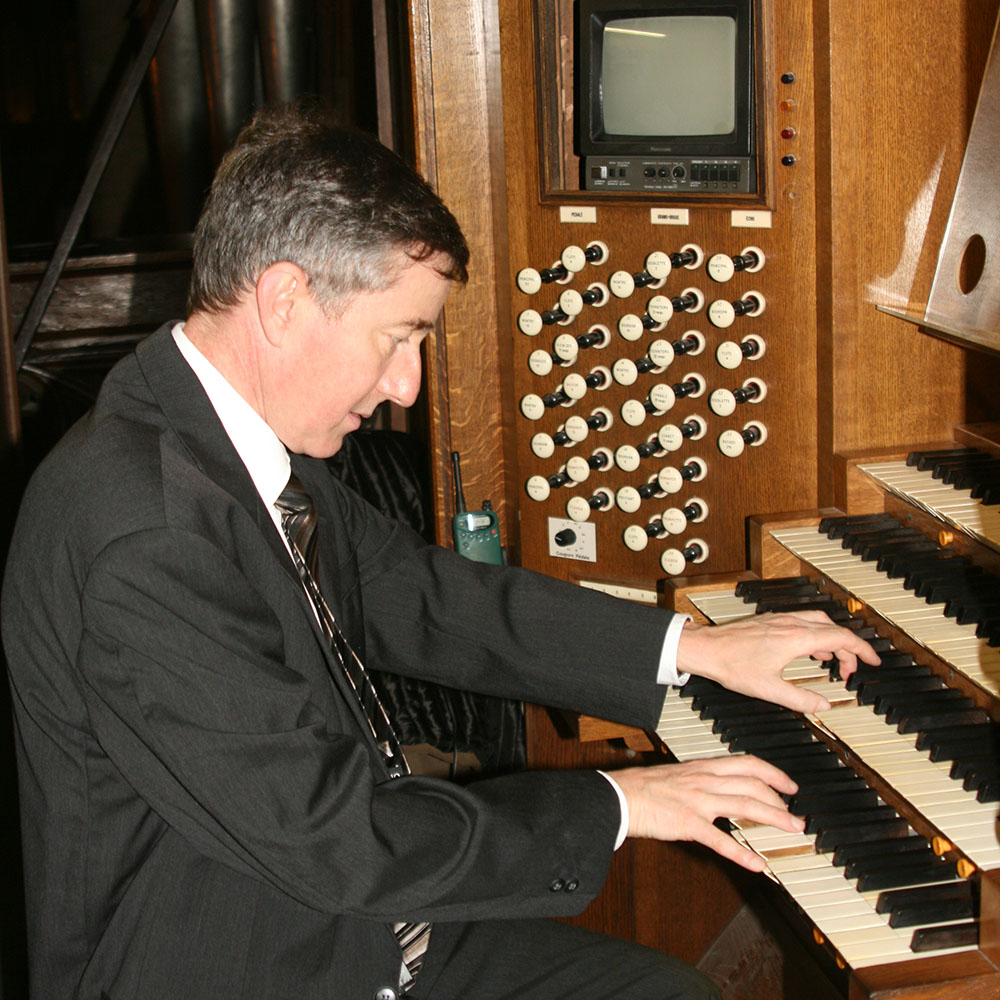
About Christophe Mantoux
Christophe Mantoux is titular organist at Saint-Séverin Church in Paris and professor of organ at the Regional Conservatory and the Pôle Supérieur de Paris. He studied organ and improvisation with Gaston Litaize, as well as harmony and counterpoint at the Paris Conservatory, notably with Jean-Claude Raynaud. In 1984, he won the Grand Prix d'interprétation at the Chartres International Organ Competition.
His regular visits to historic instruments in many countries – in France as an expert member of the National Heritage and Architecture Commission – and his study of original editions and manuscripts, as well as treatises and texts from all periods, feed his thinking as a performer and teacher.
He has published several studies, including on the reading of classical French sources for organ, legato in César Franck, and Maurice Duruflé.
His concerts have taken him to some thirty countries in Europe, North and South America, and Asia. He also teaches at various universities and academies and is a member of the jury for numerous international competitions. His recordings (Guilain, Marchand, Bach, Alain, etc.) have been praised by critics.